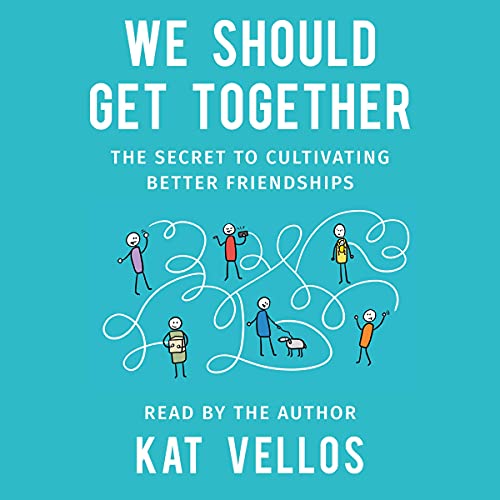
Kat Vellos, a queer writer, refers to our current social crisis as “post-pandemic platonic longing,” and I can’t recommend this book enough.
After hunkering down for so many years and witnessing so many toxic relationships and emotional car wrecks daily via television and social media, this kind of reaction would make perfect sense. (I’m trying not to mention the GOP or the former President, but there you have it.)
After the latest and ongoing societal dystopia, most people are seriously afraid to make new platonic friendships, and yet many authors including Vellos think that’s exactly why we need them so badly: healthy new platonic relationships.
I would like to add that hunkered-down people at home most days were also stuck with unhealthy visual triggers.
It turns out that I was right about how important yearly, five-year, or ten-year purging is to a healthy lifestyle. Because visual triggers can ruin your life, and toxic peeps know full well what they are doing. It’s perfectly okay to purge something if you have an unhealthy attachment to it.
For example, I once threw away a gift, an impossibly fragile crystal cake stand that turned into a punch bowl, because the woman who gave it to me made a mean comment about my social class compared to her imagined social status. Some people think that keeping it and pretending you don’t notice will even the score. I’m not that kind of a person. My dear friend joked that this made her an amateur frenemy because she let the cat out of the bag with her comment. When I thought about seeing it every day I decided to toss it. I thought about donating it, but the fact that the bowl/stand was nearly impossible to handle without cracking or breaking, I decided to save the next owner from the same kind of misery.
My husband and I made the decision to donate a painting once, a fuck you housewarming present given to us by two alcoholic, prescription drug addicts we know and decided we could no longer socialize with. I won’t get into the specifics of the painting, but It was obviously meant as a daily visual shaming device because my husband and I haven’t drunk alcohol for many, many years. They like to tell others that by their standards we are social outcasts for abstaining. That unlike practicing alcoholics and drug addicts, people who abstain are ticking time bombs.
The dead giveaway was the constant inquiry,
“How’s the painting doing?”
What kind of people would buy a painting just to get even? I wondered. This is the wrong question to ask yourself if this kind of game-playing ever happens to you.
Why wouldn’t they? is a better healthier question to ask yourself.
Here’s why: we will never unsee the more recent episodes, the two of them passed out on the floor, or unfeel the fear we felt when they yanked hard the piano strings of emotional blackmail for actually caring about them. Stupid us, afraid that they might have overdosed or even died by mixing alcohol with a prescription drug or street drugs they might have gotten their hands on when we were out with them. We will never, ever unsee them driving ahead of us, stopping the car suddenly so one of them could get out and vomit on the side of the road. And we can never fully unfeel the embarrassment we felt when we noticed what was missing from our medicine cabinet after they left our home one time,
—and they know it.
In their crazy addicted minds, that is the intention of the game and this painting would serve as a painful reminder to us that unlike us, they can’t quit being this way. Their other toxic friends don’t care, so why don’t you stop caring?
And they were right, and we did. Stop caring. Donating the painting made much more sense. It’s not the artist’s fault after all, and we hope the new owner cares more about it than we did.
I decided to throw away an obvious re-gift one time. As this relative by marriage watched us unwrap it, we couldn’t help but notice the shipping label on the box had her address and it was sent from someone else. Typically an abuser does this when there are other people in the room, so we just smiled and thanked her. My suspicions were correct. Later when I took out the granite slab hors d’oeuvres display I found a card nestled underneath it from the same person.
“What kind of person would be this sloppy?” I asked my husband.
But this is the wrong question to ask.
Should I throw this one away before I see it every day? is a much healthier question to ask yourself.
I decided a long time ago not to play the mean girl regift game, and as you can probably tell most of the stuff I could trade is long gone. Besides, who has time for this kind of game-playing when there are so many books of poetry waiting to be read?
Along with healthy people, there are a lot more unhealthy people out there who will try but ultimately fail to get you to play games with them. Nonetheless, for some strange reason, they are willing to shell out major bucks and send first-class a very expensive boxed flower just to mess with your head after seeing photos of your garden on Instagram.
My super smart friend told me once that some people view Instagram photos as triggers for an imaginary conversation you are having with them. You may be their next frenemy in their head. Yikes!
We tossed that flower in our compost.
That’s why it’s okay to purge. If seeing it every day makes you think about the time it was given to you, and it hurts, get rid of it.
I will never tell you the name of my dear friend whose beautiful letters I unfold and read almost weekly.
I won’t tell you the name of my dear friend and the gorgeous present she gave me that I see every morning when I come downstairs to get my coffee.
I won’t tell you the name of my dear friend or the comment he wrote on the inside cover of his book that I see daily on my bookshelf.
I will never, ever point to the plates and bowls and other on our shelves given to us by people we consider dear friends and healthy platonics.
Pick your friends and daily visual triggers carefully. The kind of presents you receive are always deliberate.
 Mary Louise Penaz
Leave a comment