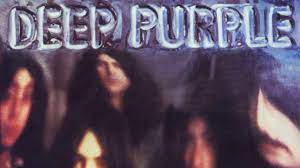
A couple of weeks ago we were traveling westward on Highway 70 from Hillsborough to Mebane, North Carolina, when Deep Purple hacked my husband’s Spotify account. Not one bit sorry, my husband kept his eyes on the road, hands firmly grasped on the steering wheel, and I watched a smile come over his face. Seated in the passenger’s seat I was the one who turned the knob up a few notches louder. I could see Sheldon Buttercup in the rearview mirror; he repositioned himself from looking out the back seat window to sitting between the two front seats.
It was a perfect cloudless day and this smooth venue of a noiseless asphalt road—a strip that runs between Hillsborough and Mebane—is among the finest for a long drive, listening to loud music and remembering the impact a song has made on your life.
A movie version would probably show an aerial shot of the driver hitting the pedal harder to speed off—and it’s not like it didn’t cross our minds.
What my husband and I share is a love of all kinds of music, and a million memories of when we first heard a song, where we were at the time, and what else was happening at the time a song dropped. Although no one said dropped back in the day.
Many years ago the Golden Rock radio station in New York threatened to close, and among the harsh critics were memory experts who said that if they stop playing oldies young people would suffer the consequences. A concerned group went as far as to quiz teens on the Beatles song used in a commercial and none could figure out the year it was written. Most thought it was a new band. Eventually critics won. The Station remains.
So as the music and lyrics of Smoke on the Water streamed through our car speakers my husband and I waited for the memories to rush back as they always do. Waited for the famous crescendo with a guitar solo, because it’s hard for either of us not to have a visceral response to this moment.
My husband and I share the same background: an economy that meant someone who was lucky enough to buy the album (or had a brother or cousin who did) was in some ways obligated to share this same moment with others. When this song came out, I knew there were other groups of 14-year-olds like me and my friends in the basement of somebody’s home playing this record over and over. Sometimes there was no need to move on musically for weeks until our bodies had sufficiently absorbed every note and word of the song. For playing it over and over, hearing that crescendo over and over was art.
And my husband does not play the air guitar; he plays a real guitar.
We know other straight married white couples our age that remember things much differently, say they never liked the song, say it makes them cringe whenever it hits the airwaves or is played at a school dance or birthday party. They don’t want their children to grow up under the influence of this kind of music. There were no cell phones back then to record them and prove otherwise. As if music is the culprit that makes everything else go wrong.
So too does the music snob rob herself of this moment. This song is profound and full of dark and geeky humor. Not sure, perhaps intentional, which makes it all the better. This band, this song, and the true event story behind the song make me wonder if songs like this one, a song, and a band that is chocked full of so much irony, could ever exist in today’s market.
Here’s to sunny car rides, metal bands, letting go and memory. Don’t miss the crescendo at around 3:30. You can cringe or you can just let go and ride those memories all the way home. It’s your reality.
Mary Louise Penaz holds a BA in English from Hunter College, where she was awarded the Academy of American Poets Award College Prize. She also holds an MA and Ph.D. in English and Literature from the University of Houston, Texas, and an MFA in Creative Writing from Bennington Writing Seminars in Bennington, Vermont.
Mary Louise currently resides in North Carolina with her husband and their Golden Pyrenees, Sheldon Buttercup. Her writing has been published in various literary magazines and anthologies.
 Mary Louise Penaz
Leave a comment