I am studying Hebrew. You’ve probably heard this before that becoming fluent in a language late in life is good for the brain’s neuroplasticity—the ability of the brain to form and reorganize synaptic connections, especially in response to learning. That’s why learning new languages comes naturally to children.
While writing the above, this vivid memory interrupted my thoughts:
I was studying Spanish in High School, and when my host sister in Spain took me out to meet her very hip artist friends one night she asked me, “We are only going to speak English now and you help us make perfect. No?” She told me that she ended her sentence in this way because she already spoke French and Italian, but she wanted to master English. I agreed.
So, learning a new language this close to Silver Sneakers Status is an extra perk for my aging brain, but the real reason I’m learning Hebrew is because a lot of people I am in contact with right now are fluent speakers. I recognize words superficially. For instance, I can mouth along with songs and prayers during Torah study and virtual Shabbat Service, and I have an english translation if I need it, but that’s about it.
I slipped in and took a seat in a pew nearest to the door for the every morning before grade school church service, and I was praying no one had taken notice that I was very late walking from home when I felt the big, warm hand of Sister Whomever slap a kleenex on my head and I felt the sting of a bobby pin tear through my hair and scalp. I took up a prayer book and began to recite the words aloud in Latin.
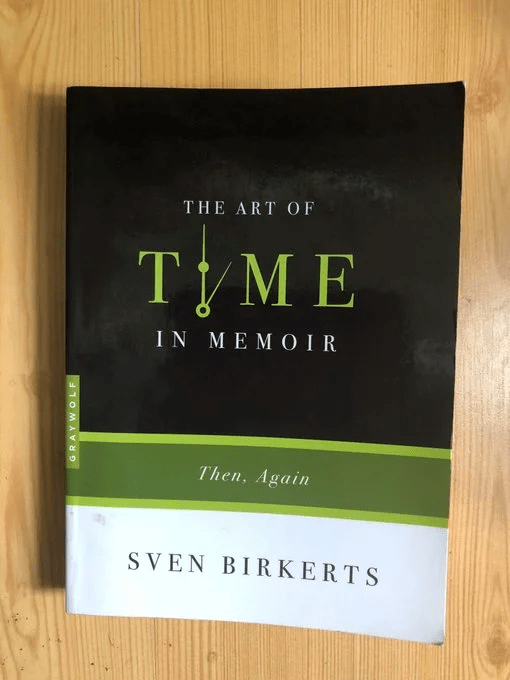
In his book, “The Art of Time in Memoir” author Sven Birkerts tells us that “our coming-of-age, however we define it—and I certainly include the childhood years as part of the mix—is the most dramatically fraught period of our lives. Relationships and myriad circumstances impinge directly on the formation of identity and from the vantage point of retrospect (the memoirist’s perch) they tell a story: this is how I came to be who I now am.”
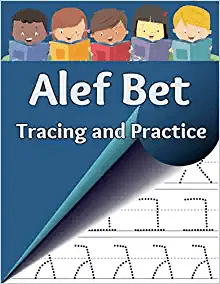
Hebrew has its own alphabet too, an added boost for my brain. Flash cards work well, but kinesthetic learning works best. Tracing the alphabet with the entire body reinforces one’s visual-motor skills. Children love tracing letters to learn the alphabet and I found more than one book for learning Hebrew.
Here are the two books I quoted in this post, and I highly recommend them.

 Mary Louise Penaz
Leave a reply to Ely Shemer Cancel reply